
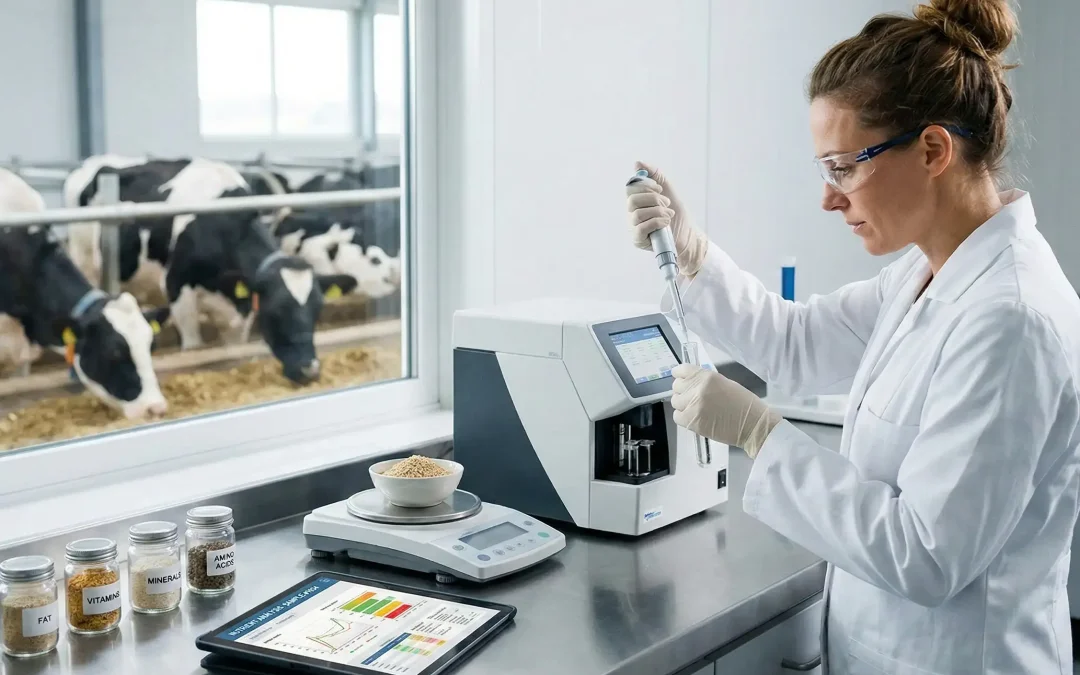
In the livestock industry, feed costs represent the largest portion of operational expenses. Success in animal nutrition depends heavily on understanding the precise nutrient composition of the ingredients used. High-quality feed ensures that animals reach their genetic potential for growth and production.
- Optimal nutrient intake boosts the immune system significantly.
- Properly balanced diets reduce the risk of metabolic diseases.
- Enhanced feed efficiency leads to higher profitability for farmers.
How Does Feed Analysis Determine Success?
You cannot determine the nutritional value of a crop simply by its appearance or smell. Professional feed analysis provides a laboratory-backed breakdown of proteins, minerals, and energy levels within the samples. This data allows producers to move away from guesswork and toward precision farming.
- Identifies the moisture content to prevent mold growth.
- Measures crude protein levels for muscle and milk production.
- Detects potential toxins or anti-nutritional factors early.
What Role Do Data Play in Animal Nutrition?
Modern livestock management relies on turning raw data into actionable feeding strategies. Animal nutrition experts use laboratory results to formulate rations that meet the specific needs of different life stages. Without accurate data, even the most expensive supplements might go to waste.
- Customizes diets for weaning, growth, and lactation phases.
- Prevents overfeeding, which reduces environmental nitrogen excretion.
- Ensures consistent growth rates across the entire herd.
Can Regular Feed Analysis Prevent Financial Loss?
Fluctuations in the quality of raw materials like corn or soy can occur due to soil or weather changes. Conducting a regular feed analysis helps farmers adjust their formulas before a drop in production occurs. This proactive approach saves money by maintaining a steady output of meat or milk.
- Minimizes the need for expensive emergency veterinary care.
- Optimizes the use of locally sourced feed ingredients.
- Protects the longevity and reproductive health of the livestock.
How to Build a Sustainable Animal Nutrition Plan?
Global food security starts with the efficient conversion of plant material into animal protein. A sustainable animal nutrition strategy focuses on maximizing output while minimizing the use of natural resources. Precise feeding is the most effective way to lower the carbon footprint of a farm.
- Reduces reliance on imported synthetic feed additives.
- Supports the use of co-products from the food industry.
- Improves the overall sustainability of the food supply chain.
What is the Future of Feed Analysis Technology?
Digital transformation is making it easier for producers to monitor their feed quality in real-time. Portable feed analysis tools now allow for instant testing directly on the farm without waiting days for lab results. This evolution ensures that animal nutrition remains a high-tech, science-driven field.
- Handheld scanners provide immediate nutrient profiles on-site.
- Cloud-based platforms track feed quality trends over time.
- AI integration helps predict future shifts in crop quality.