
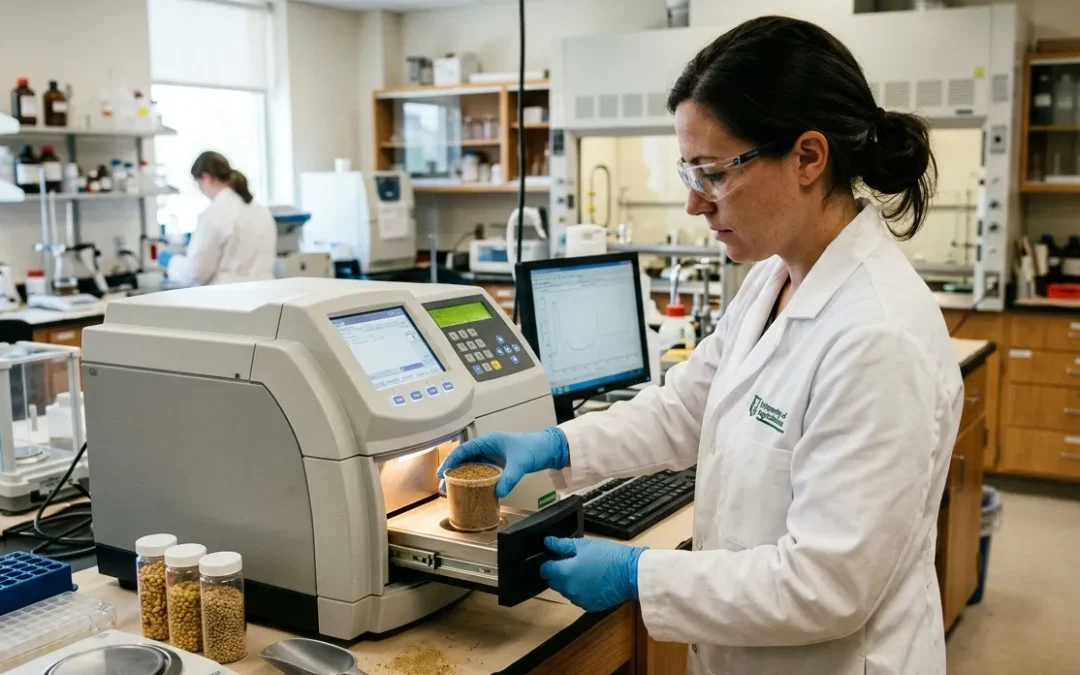
Feeding animals properly requires accurate knowledge of feed composition. But how to use a feed analysis machine correctly and efficiently? This article explains the use of feed analysis, the NIR machine for feed analysis, and how a feed analyzer or NIR feed analysis system can ensure precise nutrient assessment.
What is a Feed Analysis Machine?
A feed analysis machine is a device used to evaluate the nutritional content of livestock feed. With the help of a NIR machine for feed analysis, farmers can quickly determine protein, fiber, moisture, and other nutrients. Using a feed analyzer allows for on-site NIR feed analysis, saving time compared to traditional lab methods.
- Measures moisture, protein, fiber, and fat in feed
- Provides instant results for quick decision-making
- Helps identify nutrient imbalances in feed analysis
- NIR feed analysis is non-destructive and precise
- Feed analyzer devices are portable and easy to operate
How Do You Prepare Samples for Feed Analysis?
Proper sample preparation is critical for accurate feed analysis. Using a NIR machine for feed analysis requires representative feed samples and consistent handling. A feed analyzer ensures uniform analysis results when NIR feed analysis protocols are followed.
- Collect representative feed samples from each batch
- Grind or homogenize feed for consistent measurement
- Ensure samples are dry and free from contaminants
- Follow the feed analyzer manufacturer’s guidelines
- Use the same sample type each time to maintain accuracy
How to Operate a NIR Machine for Feed Analysis?
Operating a NIR machine for feed analysis is straightforward if proper steps are followed. A feed analyzer using NIR feed analysis can provide accurate readings in minutes, improving efficiency on the farm.
- Turn on the NIR machine for feed analysis and calibrate it
- Place prepared feed samples into the feed analyzer
- Start the measurement and wait for NIR feed analysis results
- Record and interpret the feed analysis data for diet formulation
- Regularly maintain and recalibrate the feed analyzer for consistent results
How Can Feed Analysis Improve Farm Efficiency?
Using a feed analysis machine, especially a NIR machine for feed analysis, ensures accurate feed formulation. A feed analyzer combined with NIR feed analysis results helps optimize rations, reduce waste, and improve animal health.
- Detects nutrient deficiencies or excesses
- Supports formulation of balanced rations
- Saves feed costs and reduces wastage
- Ensures consistent quality through regular feed analysis
- Helps monitor trends in feed composition for better planning
In conclusion, knowing how to use a feed analysis machine correctly is essential for modern livestock management. By following proper sample preparation, operating a feed analyzer, and using a NIR machine for feed analysis for accurate NIR feed analysis, producers can achieve precise nutrient evaluation. Consistent feed analysis improves both productivity and animal health on the farm.